From Survival to Self-Sufficiency: How Growing Your Own Food Improves Mental Health, Energy & Longevity
Have you ever found yourself simply trying to get through the week?
There was a time in my life when that was all I could do.
I was studying for my social work degree, raising my nephew and doing everything possible to keep us afloat. Rent came first, bills came next and whatever remained wasn’t much.
Most days, what remained looked like two-minute noodles.
At the time, I told myself I was coping. I was meeting my responsibilities, continuing my studies and doing what needed to be done.
But coping and thriving are not the same thing.
Deep down, I knew I wasn’t nourishing myself in a way that supported how much I was carrying.
Perhaps you have experienced this too—doing everything necessary to keep life moving while knowing you don’t feel well within yourself.
The Connection Between Food and the Brain
Having completed brain-injury rehabilitation twice, I understood something that can easily be overlooked:
What we feed our bodies can affect how we think, feel and function.
The brain requires a consistent supply of energy and a wide range of nutrients to support normal processes including concentration, memory and mood regulation.
Nutrition cannot cure every symptom or replace appropriate medical treatment, especially following a brain injury. However, adequate nourishment can form an important part of supporting overall health and recovery.
When we are under-fuelled or relying heavily on foods that provide energy but limited protein, fibre and micronutrients, we may not feel or function at our best.
Fatigue, brain fog and feeling overwhelmed can have many possible causes, but poor nutrition can contribute to the overall load the body is carrying.
I began recognising that I wasn’t giving my body or brain the foundation they needed.

When Curiosity Replaced Acceptance
The shift didn’t begin with an expensive programme or perfectly organised plan.
It began when I noticed what other people were doing.
I saw gardens producing fresh food. I noticed the colour on people’s plates and the different ways they used what they grew.
Instead of accepting that my circumstances couldn’t change, I became curious.
That moment is available to any of us: the moment when we stop seeing the current situation as the only possibility and begin asking what we could do differently.
I started asking questions.
I learned more about nutrition and how food could support energy, mood, health and recovery. I explored the idea of food as medicine—not as a replacement for healthcare, but as something we interact with every day that can either strengthen or weaken the foundations of wellbeing.
Then I began applying what I was learning.
My First Vegetable Garden
I didn’t have a large property, a freezer full of food or a perfect setup.
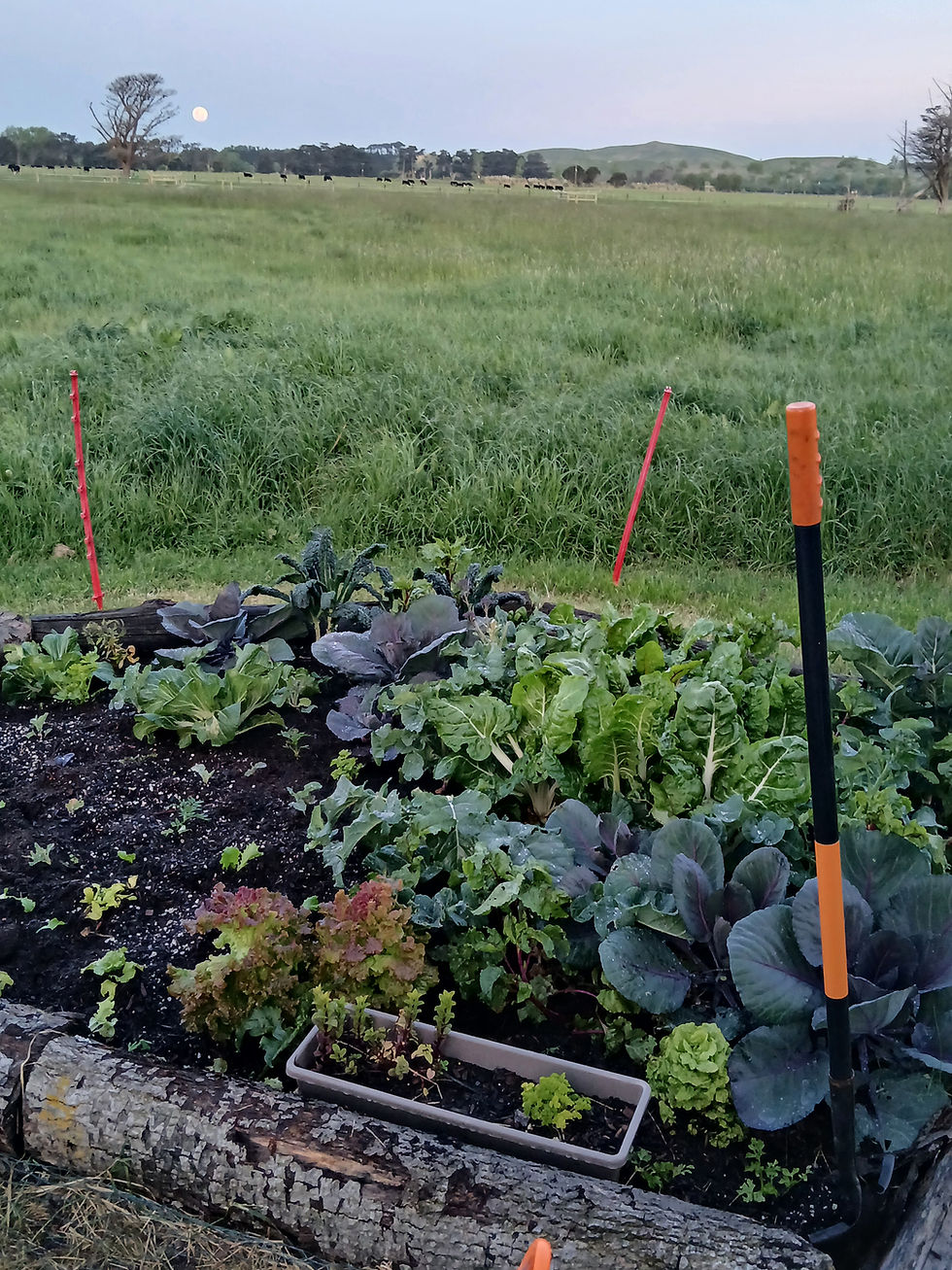
I had a planter box that had once held flowers.
That planter box became my first vegetable garden.
There was something powerful about reconnecting with where my food came from. Planting and tending food made me slow down and pay attention.
Food was no longer something that simply appeared in a packet or filled an immediate gap. I began understanding the time, care and natural processes involved in producing it.
Growing food also helped me value what I was putting into my body.
It provided physical nourishment, but the process itself offered something more. Being outside, putting my hands in the soil and watching something grow brought grounding and purpose into my life.
Each new leaf was evidence that what we nurture can grow.

No Fancy Setup—Just a Decision
I made a simple decision:
I am going to nourish my body properly.
Then I worked with what I had.
I planted small amounts and learned to stagger crops such as broccoli so everything wouldn’t be ready at once. I began eating more seasonally and focused on fresh food rather than trying to make everything perfect.
At the beginning, it wasn’t about producing an abundance of food.
It was about intention.
This is where many people become stuck. We convince ourselves that we need more money, more space, more equipment or more time before we can begin.
But real change often starts by doing something different with what is already available.
One planter box.
One herb growing on a windowsill.
One balanced meal.
One new skill.
One better choice repeated consistently.
What I Gained Was More Than Food
Yes, I began eating better.
But the greatest transformation was in me.
I moved from surviving towards becoming more resourceful.
From relying entirely on what was available to learning how to create something for myself.
From depleted towards nourished.
Growing food gave me practical knowledge, confidence and a greater sense of independence. It helped me recognise that wealth is not measured only by the amount of money we have.
There is also wealth in our skills, knowledge, resourcefulness, relationships and ability to care for ourselves.
This is a form of personal and cultural capital—the practical wisdom that can be learned, used and shared.
Knowing how to grow food, prepare nourishing meals, shop strategically or use seasonal produce creates value that extends far beyond one meal.
These are assets that remain within us.
Moving From Dependence to Empowerment
Most of us rely on wider systems for food, housing, healthcare, income and other necessities. Complete independence is neither possible nor necessary.
But increasing our knowledge and practical skills can give us greater choice within those systems.
When you understand how to prepare balanced meals, you become less dependent on expensive convenience products.
When you can grow even a small amount of food, you reconnect with the process that sustains you.
When you learn to read your body’s signals, you can make more informed choices about what supports your wellbeing.
Empowerment isn’t about doing everything alone.
It is about strengthening our capacity to participate in the decisions affecting our lives.

Food Is More Powerful Than We Are Often Taught
Food is frequently reduced to calories, weight loss and convenience.
But food provides the materials our bodies need to maintain and repair tissue, create energy and support normal brain, immune and metabolic function.
Protein supplies amino acids needed throughout the body.
Carbohydrates provide energy for the brain, movement and training.
Dietary fats provide essential fatty acids and help us absorb certain vitamins.
Fibre supports digestive health, while vitamins and minerals contribute to numerous processes happening within us every day.
No single food creates perfect health, and eating well cannot prevent every illness. What matters is the pattern created over time.
A varied, balanced diet provides a stronger foundation for energy, focus, recovery and long-term wellbeing.
It isn’t only about how you look.
It is about how you live.
Regular Meals Can Create Stability
When life is chaotic, eating often becomes reactive.
We skip meals, grab whatever is easiest and then wonder why our energy, hunger and concentration feel unpredictable.
Eating balanced meals at reasonably regular times can create more stability.
A nourishing meal may include:
A source of protein
Vegetables or fruit
A carbohydrate suited to your needs
A source of healthy fat
Water or another suitable drink
This doesn’t require elaborate recipes or expensive ingredients.
Eggs, oats, frozen vegetables, tinned fish, beans, lentils, seasonal produce and basic whole foods can all contribute to balanced meals.
Affordable nutrition still requires access, planning and practical knowledge. It is not always as simple as telling someone to “make better choices.”
But even within difficult circumstances, small improvements can matter.
Start With What You Have
If you are feeling depleted or as though you are simply getting through each day, begin with one manageable change.
You could:
Add a source of protein to breakfast
Include a piece of fruit during the day
Add frozen vegetables to an existing meal
Replace one convenience meal with a simple home-cooked option
Grow parsley, mint or another herb in a pot
Plant one vegetable
Prepare tomorrow’s lunch the night before
Carry a water bottle
Notice which meals leave you feeling satisfied and energised
Don’t try to transform everything overnight.
Choose something simple enough to repeat.
Small actions create evidence that change is possible. That evidence builds confidence, and confidence makes the next action easier.

Where I Am Now
Today, I grow vegetables, eat seasonally and keep my food relatively simple.
I remain connected to what I put into my body and how it affects the way I feel, train and recover.
The planter box that began as one small experiment eventually became part of a much larger way of living—one centred around nature, nourishment, sustainability and self-respect.
More than anything, I have created a lifestyle designed to support my wellbeing rather than continually drain it.
That didn’t happen through one enormous leap.
It grew from small choices made during a time when I had very little.
From Getting By to Flourishing
You don’t need a large piece of land or the perfect environment to begin nourishing yourself.
You don’t need to know everything.
You don’t need to overhaul your life in one day.
Begin with what you have.
Learn one skill.
Plant one seed.
Prepare one nourishing meal.
Then continue building from there.
The question is not whether you can change everything today.
It is this:
What is one small shift you can make that moves you from simply getting by towards genuinely nourishing yourself?
Because transformation doesn’t begin when every condition is perfect.
It begins when you decide to do something different with what is already in your hands.
If You’re Ready To Go Further
If this resonates with you, and you’re ready to move beyond just getting by, this is the work I do.
I help people reconnect with their bodies, understand how to nourish themselves properly, and build sustainable habits that support their health, energy, and overall quality of life.
You don’t have to overhaul everything overnight. You just need the right guidance, the right structure, and a starting point.
Comments