What Is Mindfulness? Benefits for Stress, Mental Health and Wellbeing
Updated: Jul 21

Modern life moves fast.
Many of us wake up thinking about what needs to be done, rush through our day juggling responsibilities, and go to bed replaying conversations, worrying about tomorrow, or reflecting on things we wish we had done differently. We spend so much time thinking about life that we often forget to fully experience it.
Our minds are constantly pulled between the past and the future. We replay old stories, revisit mistakes, anticipate challenges, and create scenarios that may never happen. Over time, this can leave us feeling overwhelmed, disconnected, stressed, and exhausted.
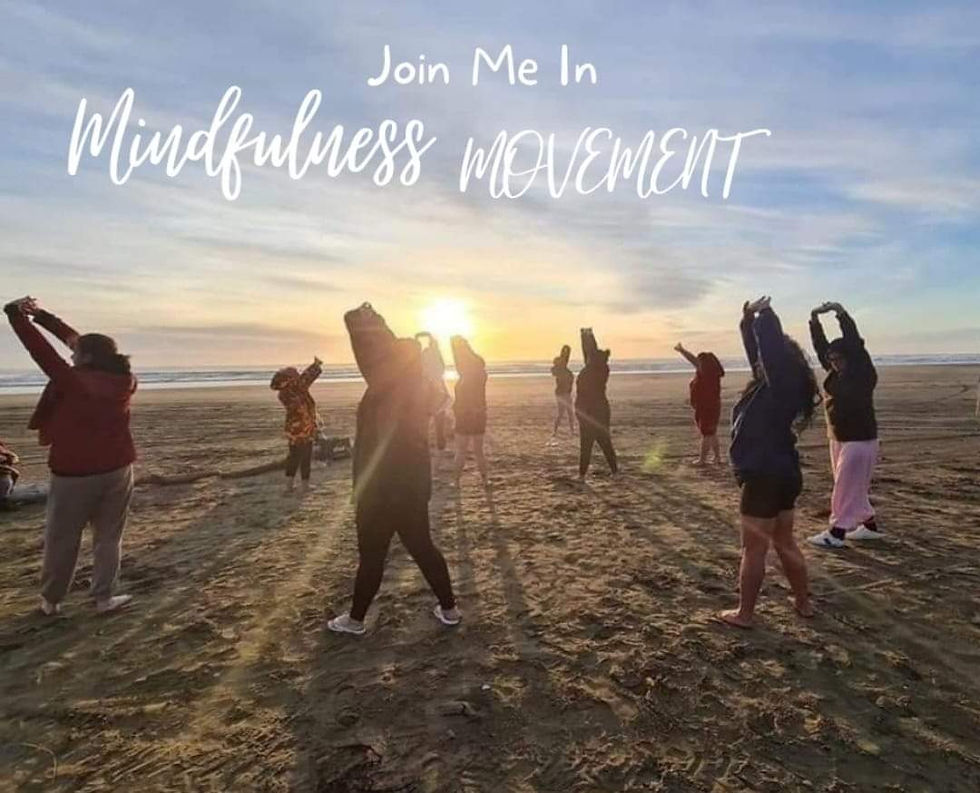
Mindfulness offers an alternative.
Rather than asking us to become someone different, mindfulness invites us to return to ourselves. It encourages us to slow down, become aware of our thoughts and behaviours, and reconnect with the present moment. In doing so, we begin to experience life more fully and respond to challenges with greater clarity, intention, and self-awareness.
At its essence, mindfulness is the practice of paying attention to what is happening right now, with openness, curiosity, and without judgment.
It sounds simple, yet it can be profoundly transformative.
Understanding Mindfulness
Mindfulness has been practiced for thousands of years and has gained significant recognition within psychology, neuroscience, and healthcare over recent decades. Research continues to demonstrate its positive effects on stress management, emotional regulation, mental wellbeing, and overall quality of life.
While there are many definitions of mindfulness, its foundation rests on three key elements: awareness, presence, and non-judgment.
Awareness involves becoming conscious of our thoughts, emotions, physical sensations, behaviours, and surroundings. Many people move through life on autopilot, reacting automatically to situations without pausing to notice what is happening internally. Mindfulness helps us become observers of our experience rather than unconscious participants in it.
Presence involves bringing our attention back to the here and now. The present moment is often overlooked because the mind naturally wanders. Yet the present is the only place where life is actually unfolding. When we learn to anchor ourselves in the present, we often discover that many of the worries occupying our minds are not occurring in this exact moment.
Non-judgment invites us to observe our experiences without immediately labelling them as good or bad. Rather than criticising ourselves for feeling anxious, frustrated, sad, or overwhelmed, we learn to acknowledge these experiences with curiosity and compassion. This creates space for understanding, growth, and self-acceptance.

The Stories We Tell Ourselves
One of the most powerful aspects of mindfulness is its ability to help us recognise the stories running through our minds.
Every person has an internal dialogue. These thoughts are shaped by our experiences, upbringing, beliefs, culture, relationships, and life events. Over time, we begin to identify with these thoughts so strongly that we assume they represent reality.
Thoughts such as:
"I am not good enough."
"I always get things wrong."
"Nobody understands me."
"I have to prove myself."
"I will never succeed."
can become deeply embedded patterns that influence how we see ourselves and the world around us.
Mindfulness teaches us something incredibly important: we are not our thoughts.
Thoughts are mental events that arise and pass away. They are not permanent truths.
When we begin observing our thoughts rather than becoming consumed by them, we create a healthy distance between ourselves and the stories our minds generate. Instead of automatically believing every thought, we learn to ask whether it is helpful, accurate, or aligned with who we truly want to be.
This awareness creates freedom.
Moving Beyond the Ego
Many mindfulness traditions refer to the concept of the ego. The ego is often misunderstood as something negative, but in reality, it serves an important purpose. It helps us develop a sense of identity and navigate the world around us.
However, difficulties can arise when we become completely identified with our ego-driven thoughts, fears, and beliefs.
The ego often seeks certainty, control, validation, and protection. It may compare us to others, keep us focused on perceived threats, or encourage us to hold tightly to stories about who we are and how life should be.
When operating primarily from the ego, we may find ourselves living from fear rather than awareness.
We may become reactive, defensive, judgmental, or overly concerned with what others think. We may blame, criticise, or resist situations that do not align with our expectations.
Mindfulness helps us recognise these patterns without becoming trapped by them.
As awareness grows, we begin to shift from automatic reactions to conscious responses. We become less driven by fear and more connected to qualities such as compassion, gratitude, acceptance, empathy, and understanding.
Rather than constantly defending our identity, we learn to simply be present with our experience.

Mindfulness and the Nervous System
One reason mindfulness has become such an important tool in modern wellbeing is its impact on the nervous system.
Our bodies are designed to respond to challenges and threats through the stress response. When we perceive danger, the sympathetic nervous system activates, preparing us for fight, flight, or freeze.
While this response is essential for survival, many people spend extended periods living in a state of chronic stress.
Deadlines, financial pressures, relationship difficulties, social media, information overload, and everyday responsibilities can keep the nervous system in a heightened state of alertness.
Over time, this may contribute to fatigue, anxiety, poor sleep, irritability, muscle tension, digestive issues, and difficulty concentrating.
Mindfulness helps interrupt this cycle.
Through practices such as mindful breathing, meditation, body awareness, and present-moment focus, we activate the parasympathetic nervous system, often referred to as the body's "rest and digest" response.
When we slow our breathing, relax our muscles, and bring awareness to the present moment, we send signals of safety to the brain and body. Heart rate slows, stress hormones begin to decrease, and the nervous system has an opportunity to reset.
This is one reason many people report feeling calmer, clearer, and more grounded after a mindfulness practice.
Rewiring the Brain Through Awareness
Modern neuroscience has shown that the brain is capable of change throughout life, a concept known as neuroplasticity.
Repeated thoughts, behaviours, and experiences strengthen neural pathways. In simple terms, the more we practise something, the stronger those patterns become.
If we constantly engage in worry, self-criticism, or negative thinking, those pathways become more established.
The encouraging news is that positive pathways can also be strengthened.
Regular mindfulness practice has been shown to support areas of the brain associated with emotional regulation, self-awareness, learning, memory, and decision-making.
Each time we notice our thoughts and gently return our attention to the present moment, we are strengthening our ability to respond consciously rather than react automatically.
Over time, these small moments of awareness can create significant shifts in how we think, feel, and behave.

Bringing Mindfulness Into Everyday Life
Many people assume mindfulness requires sitting cross-legged in silence for long periods of time. While meditation can be a valuable practice, mindfulness extends far beyond formal meditation.
Mindfulness can be woven into almost every aspect of daily living.
It can be practiced while drinking a cup of tea, walking in nature, eating a meal, exercising, gardening, washing dishes, or having a conversation.
It is not necessarily about doing more.
It is about bringing greater awareness to what we are already doing.
When eating, mindfulness invites us to slow down and truly experience the flavours, textures, and nourishment of our food.
When walking, we may notice the feeling of our feet touching the ground, the rhythm of our breath, or the sounds around us.
When speaking with another person, mindfulness encourages us to listen fully rather than planning our response before they have finished speaking.
These simple moments of presence can have a profound impact on our wellbeing.
The Power of Acceptance
One of the greatest gifts mindfulness offers is acceptance.
Acceptance does not mean giving up, settling, or approving of everything that happens in life.
Rather, it means acknowledging reality as it is before deciding how to respond.
So much suffering comes from resisting what already exists.
We fight against uncomfortable emotions, argue with circumstances we cannot change, or cling to expectations that no longer serve us.
Mindfulness teaches us to meet our experience with openness.
When we stop fighting reality, we free up energy that can be directed toward meaningful action, growth, healing, and positive change.
Acceptance creates space for wisdom.
Coming Home to Yourself
Mindfulness is not about perfection.
It is not about eliminating thoughts, achieving constant happiness, or becoming enlightened.
The mind will continue to wander.
Difficult emotions will still arise.
Challenges will continue to be part of life.
The practice is simply noticing when we have drifted away from the present moment and gently returning.
Again and again.
Over time, this practice cultivates greater awareness, resilience, emotional balance, self-compassion, and connection.
It reminds us that beneath the noise, the conditioning, the expectations, and the stories we tell ourselves, there is a deeper part of us that is already whole.
A part of us that exists beyond fear, beyond judgment, and beyond the endless chatter of the mind.
Mindfulness is the practice of reconnecting with that part of ourselves.
It is the practice of coming home.
At MindBodySoul-Unleashed, I believe true wellbeing involves nurturing the mind, body, and spirit as interconnected parts of a whole. Through mindfulness, movement, nourishing nutrition, self-care, and nervous system regulation, we can create lasting change from the inside out and develop a deeper connection to ourselves, others, and the life we are living.
Because life is not happening someday in the future.
Life is happening now.
In this breath.
In this moment. ✨️



Comments