YOU CAN’T OUT-TRAIN WHAT YOU DO EVERY DAY

We put a lot of emphasis on exercise when we talk about improving our health. Get moving. Join a gym. Walk more. Lift weights. And yes — movement is incredibly important. Regular physical activity supports cardiovascular health, insulin sensitivity, muscle and bone health, physical function, mental wellbeing and healthy weight regulation. It is one of the most powerful things we can do for our long-term health.
But there’s another part of the conversation we need to be having: what are we consistently putting into our bodies? Because you can exercise regularly and still have a dietary pattern that isn't supporting your health. A workout doesn't somehow erase everything that happens during the other 23 hours of the day. Exercise and nutrition affect our physiology in different and complementary ways, and reducing health to a catchy formula such as “80% nutrition, 20% exercise” isn't supported by evidence.
Different health outcomes are influenced differently by nutrition, physical activity, sleep, genetics, smoking, alcohol, stress, our environment and many other determinants. What the research does increasingly demonstrate is the value of addressing multiple lifestyle factors together. A 2026 overview of 32 systematic reviews found that, in adults with overweight or obesity, combined physical activity and dietary interventions generally produced better outcomes for body weight, BMI, waist circumference, fat mass and cardiorespiratory fitness than single-component approaches.
So perhaps we're asking the wrong question when we ask whether nutrition or exercise is “more important.”
The human body doesn't work in percentages. It works as a system.
Movement matters. Nutrition matters. Sleep matters. Recovery matters. Stress regulation matters. And over time, each interacts with the others.
THE LITTLE THINGS COUNT — BECAUSE THEY DON'T STAY LITTLE
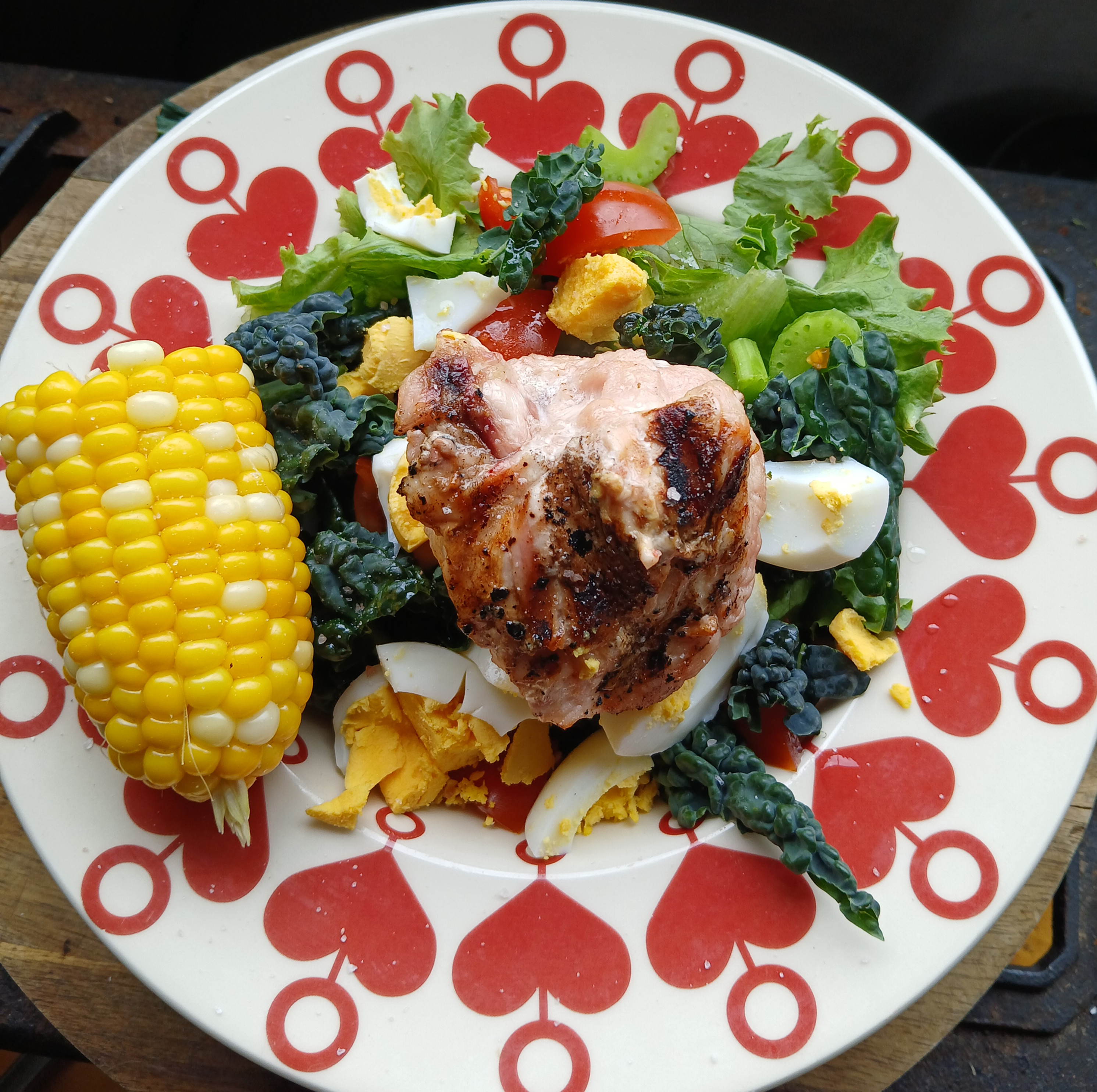
One takeaway doesn't determine your health. Neither does one ice cream, one piece of chocolate or one meal out. Health isn't built or destroyed by a single food, and turning individual foods into something to fear isn't useful or evidence-based.
What matters far more is the pattern created by repetition.
Think about all the things that can easily disappear from our awareness: the milk in several coffees, sauces and dressings, sugary drinks, processed snacks, convenience foods, takeaways that have gradually become a weekly habit, or portions that consistently provide more energy than our body requires. None of these things needs to be demonised. The important question is what proportion of our overall dietary pattern they occupy and what they may be displacing.
That distinction matters because the body responds to what we repeatedly expose it to. Sodium provides a good example. Sodium is essential for normal physiology, including fluid balance and nerve and muscle function, but chronically excessive intake can contribute to elevated blood pressure in susceptible individuals. Likewise, fat is essential, but dietary patterns high in saturated fat can increase LDL cholesterol, while replacing saturated fats with unsaturated fats is a core feature of current cardiovascular dietary recommendations. Consistently consuming more energy than we expend can also contribute to increased body fat over time — regardless of whether those excess calories came from foods we considered “healthy.”

Current WHO (World Health Organization) guidance therefore doesn't prescribe one magical diet. It describes healthy dietary patterns through four principles: adequacy, balance, moderation and diversity, with minimally processed and unprocessed foods forming the foundation.
The American Heart Association's updated 2026 cardiovascular guidance reaches a very similar conclusion. It recommends dietary patterns rich in vegetables and fruit, whole rather than refined grains, healthy protein sources and unsaturated fats, while limiting added sugars, sodium, saturated fats and ultra-processed foods. Importantly, it also includes balancing energy intake with expenditure as part of cardiovascular health.
This isn't about perfection.
It's about recognising that what we occasionally do matters far less than what we repeatedly do.
WE CAN FEEL “FINE” WHILE RISK IS DEVELOPING
One of the reasons nutrition can be easy to dismiss is that the consequences of our choices are not always immediate.
Eat a highly processed meal tonight and you don't wake up tomorrow with cardiovascular disease. Have too much sodium for years and you may not feel your blood pressure gradually changing. Insulin resistance, elevated LDL cholesterol, visceral fat accumulation and impaired glucose regulation can develop quietly.
That creates an interesting psychological trap: we often judge the healthfulness of our behaviour by how we feel today, while many chronic diseases develop over years or decades.
Cardiovascular disease, type 2 diabetes and many other noncommunicable diseases are multifactorial. Food is not their only cause, and it would be irresponsible to suggest otherwise. But diet is one of the major modifiable factors within that much larger picture. WHO describes unhealthy diets as a major risk factor for disease and disability and identifies healthy dietary patterns as protective against noncommunicable diseases including heart disease, stroke and diabetes.
This is why preventative health asks us to think differently.
Rather than waiting for our body to force us to pay attention, what would happen if we started listening earlier?
“BUT I EAT PRETTY HEALTHY…”
Most people aren't deliberately lying when they say they eat well. Often, we genuinely remember our eating differently from how it looks when it's written down.
We remember the vegetables with dinner. We remember making porridge for breakfast.
We remember the healthy lunch. We may not automatically include the handfuls eaten while preparing food, several coffees, sauces, drinks, weekend takeaways, larger portions or snacks consumed while distracted.
That's one reason a food journal can be such a valuable educational tool. It turns perception into something observable.
And the purpose isn't judgement. It's curiosity.
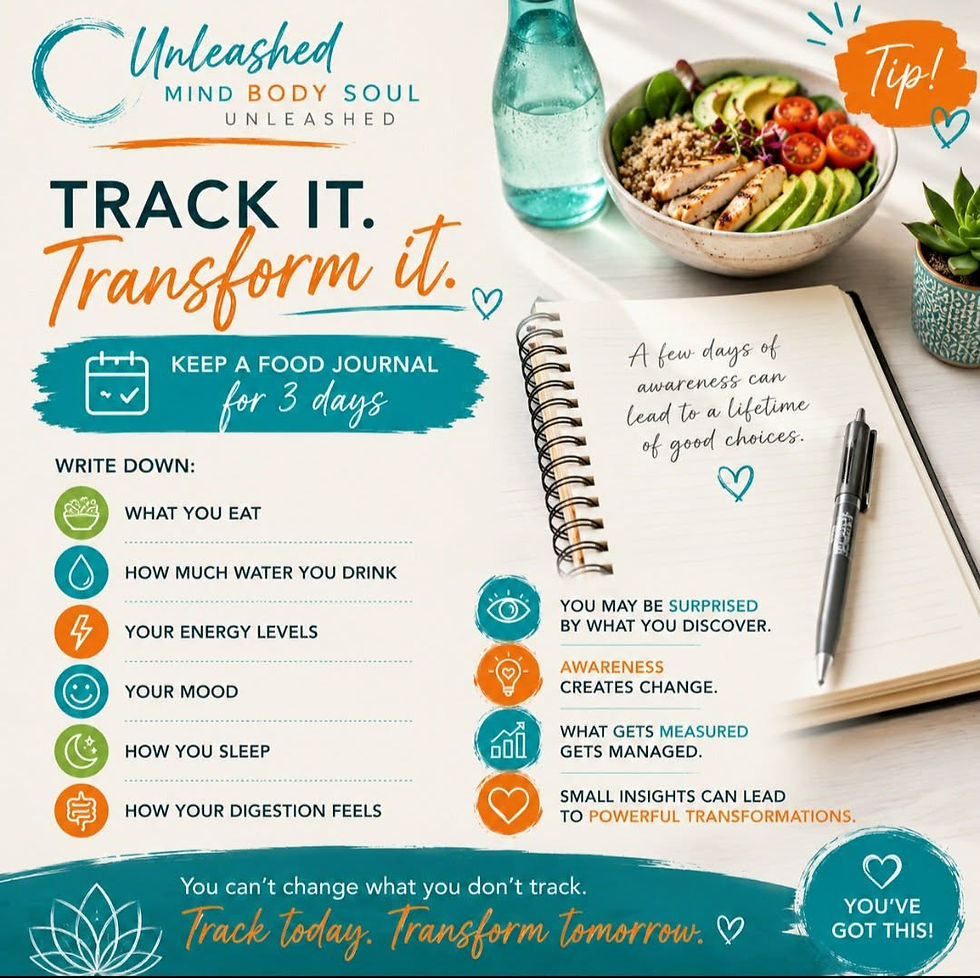
Instead of looking at a journal and labelling foods “good” and “bad,” look for patterns. How much of the diet consists of vegetables, fruit, legumes, whole grains, quality protein sources, nuts, seeds and other nutrient-dense foods?
How much is highly processed? Where is the fibre coming from? How much sodium, saturated fat and free sugar might be accumulating across the day?
How often are we genuinely physically hungry when we eat? How often are we tired, stressed, bored, emotionally uncomfortable or simply responding to availability and habit? Are we getting enough water intake a day?
WHO currently recommends at least 400 grams of fruit and vegetables daily for adults and children over 10, while free sugars should remain below 10% of total energy intake and sodium below 2 grams per day — equivalent to about 5 grams of salt. Those recommendations provide something useful to compare our perception against.
We might feel as though we eat plenty of vegetables. But do we?
We might think takeaway is “only occasional.” But what does the month actually look like? We might believe we don't eat much sugar because we don't add sugar to our coffee, while overlooking sweetened drinks, sauces, cereals, snack foods and other sources.
Awareness isn't restriction. Awareness gives us choice.
FOOD IS INFORMATION, FUEL AND RAW MATERIAL
Another problem with the nutrition conversation is that food often gets reduced to calories and body weight.
Calories matter because energy balance matters, but nutrition is much bigger than that. Every day the body is turning over tissue, producing enzymes and neurotransmitters, maintaining cell membranes, regulating fluid balance, repairing muscle, supporting immune function, transporting oxygen, maintaining bones and generating energy. Those processes require raw materials.
Protein supplies amino acids required for tissue repair, muscle protein synthesis and numerous enzymes and structural proteins.
Carbohydrates provide an important source of energy, particularly for higher-intensity activity, while fibre-rich carbohydrate foods contribute to gastrointestinal and metabolic health.
Dietary fats provide essential fatty acids, contribute to cell membranes and allow us to absorb the fat-soluble vitamins A, D, E and K. Vitamins and minerals participate in thousands of biochemical reactions involving everything from energy metabolism and oxygen transport to muscle contraction and nerve signalling.

This is where I think we can completely change the way we look at food.
Instead of food simply being “What do I feel like eating?”, we can also ask:
“What am I asking my body to do, and am I giving it what it needs to do it?”
If we want our body to train, recover, think, regulate blood glucose, maintain muscle, support bone, produce energy and remain physically capable as we age, then nutrition isn't an optional extra sitting beside exercise.
It is part of the infrastructure that allows those processes to happen.
WHAT ABOUT ULTRA-PROCESSED FOOD?
This is an area where we need some perspective, because “processed” doesn't automatically mean unhealthy. Frozen vegetables, canned legumes, yoghurt and wholegrain bread have all undergone some form of processing and can still provide valuable nutrition. The bigger concern is when ultra-processed foods begin forming a significant part of our everyday diet — foods that have often been substantially changed from their original form and can contain combinations of refined ingredients, added sugars, sodium, fats, flavourings, preservatives, colours, emulsifiers and other additives.
And this is where I think we need to become much more aware of what we're actually buying. Food packaging can be incredibly persuasive. “Low sugar.” “Low fat.” “High protein.” “Natural.” “No added sugar.” We see one claim on the front of a box and can automatically assume we've made a healthy choice. But one marketing claim doesn't tell us the nutritional quality of the whole food. Something can be low in sugar and still provide very little fibre, protein, vitamins or minerals. Something can be marketed as high in protein while also being highly processed. And while an ingredient having a number or an unfamiliar name doesn't automatically make it harmful, it's worth looking beyond the advertising and asking what that food is actually contributing nutritionally.
Because our bodies need far more than calories.
Every day, whether we're conscious of it or not, our bodies are carrying out thousands of processes that require nutrients. Protein provides amino acids needed to maintain and repair tissue, including muscle. Carbohydrates and fats provide energy. Essential fats contribute to cell membranes and hormone production. Fibre supports digestive and metabolic health. Vitamins and minerals are involved in everything from energy production and oxygen transport to bone health, immune function, nerve signalling and normal muscle function. Our brain, muscles, organs and endocrine system don't stop requiring those nutrients simply because we've eaten enough calories.

This is where the difference between being fed and nourished becomes important.
We can consume plenty of energy while still having a dietary pattern that isn't particularly nutrient dense. A highly processed snack may give us energy, but if those foods repeatedly replace fruit, vegetables, legumes, whole grains, quality proteins, healthy fats and other nutrient-rich foods, we aren't simply adding processed foods to our diet — we're potentially removing opportunities to give our body something it needs.
And just like the other examples I've talked about throughout this article, it's the accumulation that matters.
One sauce isn't the issue. One packaged snack isn't the issue. One convenience meal isn't the issue. Neither is having takeaway occasionally. But when we add together breakfast cereals, snack bars, flavoured drinks, sauces, processed meats, packaged snacks, convenience meals, desserts and takeaways across an entire week, the overall nutritional picture can look very different from what we imagined.
At the same time, the sodium, free sugars, saturated fats and overall energy contained across those foods can accumulate too. We don't consume nutrients or ingredients in isolation — our body receives the total of everything we've eaten across the day, repeatedly, over time.
That's why looking at one label can sometimes be misleading.
Five grams of something here might seem insignificant. A little extra sugar there doesn't seem important. The sodium in one sauce might not look concerning. The calories in a drink can be easy to overlook altogether. But add together multiple products, meals, drinks and portions every day, then repeat that pattern week after week and year after year, and those “little things” are no longer isolated choices.
They've become a dietary pattern.
And the opposite is also true.
The vegetables we consistently eat add up. The fibre adds up. The quality protein adds up. The fruit, whole grains, legumes, nuts, seeds and healthy fats add up. The vitamins and minerals we're supplying our body with every day add up. Drinking water instead of another sugary drink adds up. Cooking one more meal from basic ingredients adds up.
That is what I find empowering about nutrition.
We don't need to eat perfectly to improve our health. We need to understand the direction our repeated choices are taking us.
Research into ultra-processed foods gives us good reason to pay attention to that direction. A major 2024 umbrella review published in The BMJ brought together 45 pooled analyses representing almost 9.9 million participants. Greater exposure to ultra-processed foods was associated with higher risk across 32 of the 45 health outcomes examined, particularly cardiometabolic, mortality and some mental-health outcomes.
But shouldn't take research like this and turn it into another fear-based message telling people that one processed food is going to damage their health.
Instead, I think it gives us a reason to look at our patterns with greater awareness.
Because nutrition isn't just about what we're trying to avoid. I think we spend far too much time talking about what people should remove — less sugar, less fat, fewer calories, fewer processed foods — without talking enough about what we're actually trying to put back in.

What does your body need to function well?
It needs enough energy. It needs protein. It needs essential fats. It needs fibre. It needs vitamins and minerals. It needs a variety of foods that provide different nutrients. And if we want our bodies to remain strong, capable and healthy as we age, those needs don't become less important — they become increasingly worth paying attention to.
So perhaps the most useful reflection isn't, “Do I eat processed food?” Most of us do.
It's something much bigger:
When I look at the way I eat as a whole, am I mostly just feeding my body — or am I actually nourishing it?
Because the occasional packaged food, takeaway, pizza or ice cream isn't what defines our health.
It's what forms the foundation of what we do, day after day, that deserves our attention.
THERE IS A DIFFERENCE BETWEEN ENJOYING FOOD AND USING FOOD WITHOUT AWARENESS
Looking after our health doesn't mean never eating pizza, chocolate or ice cream. And personally, I don't think we need to build a healthy lifestyle around the idea of a weekly “cheat day.”
The word itself is interesting.
Cheating on what? If our normal way of eating feels so restrictive that we're waiting all week to escape from it, perhaps the relationship with food needs attention rather than another set of rules.
Food is nourishment, but food is also culture, pleasure, celebration and connection. Those things matter too. A healthy relationship with food should be able to accommodate them.
The difference is intentionality.
There is a very different relationship with food when we can enjoy something, taste it, be present with it and stop when we're satisfied, compared with eating automatically because we're stressed, distracted or following the belief that “I've blown it anyway, so I may as well keep going.”
That's why mindful eating belongs in this conversation.
It gives us a space between impulse and action.
EXERCISE ISN'T A FREE PASS — AND FOOD ISN'T PUNISHMENT
We don't need to exercise to earn our food, and we shouldn't use exercise to punish ourselves for eating.
But the reverse is also important: being physically active doesn't make us metabolically invincible.
Exercise can improve insulin sensitivity, cardiovascular fitness, muscular strength, bone health, functional capacity and mental wellbeing. What it cannot do is replace nutrients that aren't being consumed, provide fibre that isn't in the diet, or automatically neutralise the effects of a consistently poor dietary pattern.
This is supported by intervention research.
A 2025 systematic review and meta-analysis involving people with obesity and metabolic syndrome found that adding exercise to dietary intervention produced additional improvements in waist circumference, fasting glucose, body weight, body fat, total cholesterol and LDL cholesterol, although not every cardiometabolic marker improved significantly more with the combined approach.

That's an important point because health isn't binary.
Nutrition isn't the answer instead of exercise, and exercise isn't the answer instead of nutrition. They influence different pathways, and together they form part of a much larger physiological system.
This is also why I don't believe we can look at our physical health without considering what is happening mentally and emotionally. We can know what nutritious food looks like and understand that movement is good for us, but knowledge alone doesn't necessarily change behaviour.
Our mindset, habits, beliefs, stress levels and relationship with ourselves can influence whether we actually put that knowledge into practice consistently.
This is where Mindset, Movement and Nutrition come together — the three pillars I continually return to in my own approach to health and WellBEing.
Nutrition provides the energy, protein, essential fats, fibre, vitamins and minerals our bodies need to function, repair and recover. Movement gives the body a reason to adapt — challenging our cardiovascular system, muscles, bones, balance, mobility and physical capacity so we can continue doing the things we want to do as we age.
And Mindset influences how we approach both. It affects the habits we build, the choices we repeat, how we respond when life becomes difficult and whether looking after ourselves becomes another short-term programme or simply part of how we live. And none of these pillars exists independently.

If we're training hard but consistently under-fuelling or eating poorly, we're not giving our body everything it needs to support what we're asking it to do. If we're eating nutritious food but barely moving, we're missing many of the adaptations that only physical activity can provide. And if our mindset keeps pulling us into all-or-nothing thinking — I've missed a workout, I've eaten something I didn't plan, I've failed, I'll start again Monday — even the best nutrition or exercise plan can become difficult to sustain.
That's why I think the conversation needs to move beyond diet versus exercise.
The goal isn't to eat perfectly. It isn't to exercise every day. And it certainly isn't to spend our lives trying to control or punish our bodies.
It's to develop a way of living that actually supports them.
To nourish ourselves because our bodies need nutrients. To move because strength, mobility, cardiovascular fitness and physical independence matter. And to develop the awareness and mindset that allow those behaviours to become something we can continue — not for six weeks, but throughout our lives.
Because when we start looking at Mindset, Movement and Nutrition as interconnected rather than separate, health becomes about much more than changing what we see in the mirror.
It becomes about what our body can do, how we feel, how we function, how we recover and ultimately the quality of life we're building for the years ahead.
AND THEN THERE'S THE PART WE OFTEN FORGET: RECOVERY
Even excellent nutrition and exercise don't exist in isolation.
Sleep, recovery and our stress physiology influence our capacity to train, recover and make decisions. When we're exhausted or chronically stressed, we may experience changes in appetite and eating behaviour, reduced motivation to move, poorer sleep and reduced capacity to make deliberate choices. That doesn't mean every health problem can be blamed on a “dysregulated nervous system” — that would be another oversimplification — but it does mean that wellbeing needs to be viewed as an interconnected system rather than a collection of isolated behaviours.

Sometimes looking after our health means training hard.
Sometimes it means eating enough nutritious food to recover from that training.
Sometimes it means walking rather than smashing ourselves in another workout.
Sometimes it means sleeping.
Sometimes it means slowing down enough to notice what our body has been trying to tell us.
Health isn't created through punishment. It's created through relationship — learning to understand the body we're asking to carry us through life.
THINK LONG TERM
Perhaps one of the biggest shifts we can make is moving away from asking what today's choice will do to our weight and asking what our repeated choices are doing for our future health.
Most of us don't make one enormous decision that determines how we age.
We make thousands of seemingly insignificant ones.
What goes into the trolley. What we drink most days. Whether we cook. Whether takeaway is occasional or habitual. Whether vegetables are the foundation of our meals or an afterthought. Whether we move. Whether we rest. Whether we stop eating when we're satisfied. Whether we notice when we're using food to soothe something that food cannot actually resolve.
None of those decisions needs to be perfect.
But collectively, they become our lifestyle.

And that's also incredibly empowering, because if our health is influenced by patterns, we don't have to change everything overnight.
We can change a pattern.
Then another.
Then another.
The same repetition that can gradually move health in one direction can also begin moving it in another.
So yes — move your body. Walk, lift, stretch, play, build strength and improve your fitness. Muscle matters. Cardiovascular fitness matters. Remaining physically capable as we age matters enormously.
But don't forget to look at what's happening during all those hours outside the gym.
Because long-term health isn't created by one workout or destroyed by one dessert. It's shaped over time by the interaction between the food we eat, the way we move, the way we sleep, the way we recover, the way we respond to stress and the thousands of ordinary choices that eventually become our normal.
Maybe the question isn't simply:
“Am I exercising enough?”
Maybe the more powerful question is:
“Are the things I repeatedly do today supporting the body and the health I want to be living in ten, twenty or thirty years from now?” ✨️
Katrina Jenkins
MindBodySoul-Unleashed ✨️
0277 550 387

Comments