Reset, Reconnect & Realign: Sustainable Health and Wellbeing
We are taught how to set goals. We are taught how to work harder, become more disciplined, push through discomfort and keep moving towards the next milestone. What we're rarely taught is how to recognise when the goal we're so determined to reach no longer aligns with the person we've become. So we keep chasing: the next promotion, the next qualification, the next relationship, the next income target, the next transformation, the next number on the scales, the next fitness goal, the next version of ourselves that we imagine will finally make us feel successful, secure, worthy or complete. Almost as soon as we arrive, another finish line appears.
There is nothing wrong with ambition. Goals can give our lives direction, challenge us to grow and reveal capacities we may never have discovered otherwise. Discipline, consistency and resilience can be extraordinary forces for change. But there is a point at which relentless forward movement can stop being growth and simply become habit. We can become so skilled at pursuing the next thing that we rarely stop to ask whether the direction itself still makes sense, whether the life we're building reflects what matters to us, or whether we're still chasing something because we genuinely want it—or because we've invested so much in becoming the person who achieves it.
That question matters because people change. Life changes us. Age, experience, success, disappointment, relationships, loss, health, work and everything we encounter along the way can alter what we value. A goal that was completely aligned with us five years ago may have served its purpose beautifully without needing to remain our goal forever. Perhaps one of the more challenging aspects of growth is accepting that changing direction doesn't necessarily mean we were wrong before. Sometimes it simply means we've learnt enough to see differently now.

What if the next level of growth isn't another goal, but developing enough awareness to question the ones we're already chasing?
That is one of the greatest lessons bodybuilding taught me.
Over several years, the sport challenged me physically and mentally and gave me an extraordinary education in the human body. I learnt what consistency can create, how nutrition and movement can transform a physique, how recovery affects performance and how mindset can carry us through periods when motivation has long disappeared. I learnt that the body is extraordinarily adaptable, but I also learnt that adaptation isn't created by constantly demanding more. What we ask from the body has to be supported by what we give back to it.

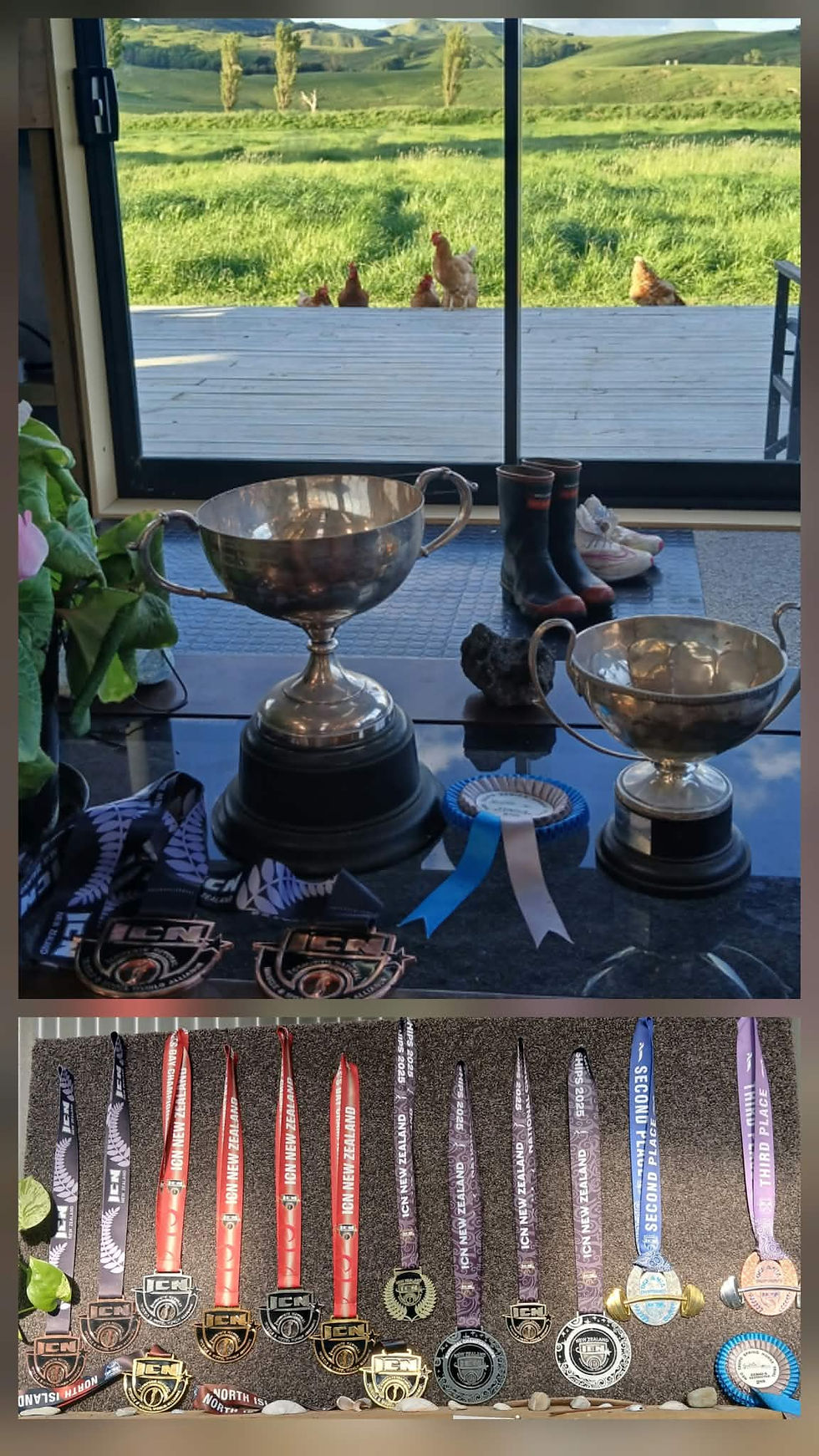
Last year, that journey took me to the incredible privilege of representing New Zealand on the bodybuilding stage. It was an achievement built through years of work, sacrifice, resilience and belief, and one I will always be proud of. But like so many goals in life, once one had been reached, another was waiting. There was another competition, another opportunity to improve, another level to reach. Achievement can become normal remarkably quickly, particularly when we're accustomed to setting high standards for ourselves.
During my final competition, however, something shifted. It wasn't a loss of discipline or capability. I knew I could continue, and perhaps that was what made the realisation so important. I wasn't being forced to stop. I had to decide whether being capable of continuing was enough reason to keep doing it.
Before the final preparation, I had been lean, strong, energetic and performing well. Then came the demands of becoming stage-ready. Afterwards, despite still looking extremely conditioned, my strength and energy had fallen and my hunger had increased. From the outside, I looked exceptionally fit; internally, my body was asking for recovery. That contradiction stayed with me because it highlighted something that reaches far beyond bodybuilding: what looks successful from the outside and what is sustainable on the inside are not always the same thing.
Most of us will never prepare for a bodybuilding stage, but many of us know that contradiction in another form. A career can look successful while someone is chronically exhausted. A full diary can look productive while leaving no space to actually experience life. A disciplined diet can appear healthy while food occupies far too much mental space. An exercise routine can look impressive while the body never feels recovered. We can be dependable, productive, strong and seemingly "doing well" while privately knowing that maintaining it all is costing more than we're willing to admit.
External achievement doesn't always tell us what is happening internally. Eventually, we may need to ask a more important question than What can I achieve next?
What am I actually trying to create—and is the way I'm living taking me there? That question became a reset.
Reset: stop automatically reaching for the next thing
A reset isn't failure, retreat or throwing away everything we've built. It is an interruption of automatic momentum long enough to ask whether the direction we're travelling still deserves our energy. That sounds simple, but in a world that constantly rewards more, stopping long enough to evaluate where we're going can feel surprisingly uncomfortable.
Modern culture celebrates forward movement. Productivity is rewarded. Busyness can become a badge of importance. Fitness culture encourages constant progression. Business celebrates growth. Social media places an endless stream of other people's achievements in front of us, subtly reinforcing the idea that wherever we are, we should probably be further ahead. Even rest can become another performance strategy: sleep better so you can achieve more tomorrow.
Over time, we can become very good at doing without necessarily questioning why we're doing it. We move from one responsibility to another, solve the next problem, meet the next deadline and set the next goal. There may be nothing obviously wrong with our lives, yet somewhere underneath all that movement is a feeling that we haven't actually checked in with ourselves for a very long time.
The body offers an interesting counterargument to this way of living. Physical adaptation doesn't come from endlessly applying more stress. Training provides a stimulus, but nourishment and recovery allow us to adapt. Sometimes progression requires greater challenge; sometimes it requires reducing the load. The intelligence lies in knowing which is required. That lesson has shaped the way I now think about health far beyond exercise, because our physical health, emotional wellbeing, mindset, environment and nervous system don't operate as unrelated parts.

Life stress doesn't arrive in neatly separated compartments. Training stress, work pressure, relationship strain, financial concerns, inadequate sleep, constant stimulation and emotional demands all become part of the load we're carrying. We can become so accustomed to functioning under that load that exhaustion begins to feel normal. We might tell ourselves we're simply busy, getting older or lacking motivation, when perhaps we haven't created enough space to notice what our mind and body have been communicating.
This is why resetting isn't simply "taking a break." It is creating enough space to gather information. How am I actually sleeping? What is my energy like throughout the day? Am I nourishing myself or simply getting through the day? Does the way I move leave me stronger and more capable, or am I constantly depleted? What happens in my body around certain people and environments? What am I tolerating simply because it has become familiar? What am I pursuing because it genuinely matters to me, and what am I pursuing because I've become attached to the identity that comes with it?
Perhaps there is another question worth sitting with too: If nobody else could see the achievement, would I still want it? We don't need to have an immediate answer. Sometimes the purpose of a reset is simply to stop filling every available space long enough for the real questions to surface.

My decision to step away from bodybuilding wasn't made because the journey had gone wrong. In many ways, it had done exactly what it needed to do. It had taken me far enough that I could see something I couldn't have seen from the starting line. Once I stopped automatically looking towards another competition, there was space to notice what had changed, what still mattered and what I wanted health to mean in the next chapter of my life.
And once we create enough space to notice, the natural next step is to reconnect.
Reconnect: the body has been part of the conversation all along
We can become remarkably disconnected from the bodies we're living in, often without realising it. We override hunger because a diet tells us to. We ignore fatigue because there is work to finish. We reach for stimulation because sleep hasn't been enough. We train harder because we're frustrated with our bodies. We eat reactively because we're stressed and then judge ourselves for lacking discipline. We remain constantly switched on and eventually become so accustomed to that state that slowing down itself feels uncomfortable.

Bodybuilding made body awareness impossible for me to ignore. Small changes in nutrition, hydration, movement, digestion, stress, sleep and recovery could alter how I looked, how I trained and how I felt. It reinforced something that had been central to my understanding of health long before I stepped onto a bodybuilding stage: the body is always providing information. Hunger, fatigue, energy, sleep, digestion, tension, mood, strength and recovery can all tell us something about how we're functioning.

That doesn't mean every sensation is an instruction that must be obeyed. Sometimes growth requires discomfort. Sometimes the body needs challenge. Sometimes we need to move when we'd rather remain still, have a difficult conversation when avoidance would feel easier, or persist through the uncomfortable stage of creating a new habit. Body awareness isn't about becoming afraid of discomfort or abandoning discipline. It is what allows discipline to become intelligent rather than automatic.
The deeper lesson for me was recognising that health isn't created by controlling one variable in isolation. Nutrition matters, but food isn't simply calories to manipulate; it nourishes and fuels the body we're asking to perform for us. Movement matters, but exercise isn't simply a way to burn energy or change our appearance; it can build strength, mobility, confidence and physical capacity. Mindset matters, but it isn't about pretending everything is positive; it's about becoming aware of the thoughts, beliefs and patterns influencing our choices.

Recovery matters. Sleep matters. Stress matters. Our nervous system matters. The people and environments we repeatedly expose ourselves to matter.
They are continually influencing one another. Mind. Body. Soul.
That understanding became increasingly important during my final preparation. Rather than assuming more restriction, more control or more manipulation would automatically produce a better outcome, I increasingly worked with my body. I paid attention to what it was telling me, nourished it, hydrated it and adjusted when something wasn't working instead of blindly following what competitors were supposedly "meant" to do. My body responded, and the experience reinforced something much bigger than competition: sometimes the answer isn't controlling ourselves more effectively. Sometimes it is developing enough awareness to recognise what we actually need.
For someone reading this, reconnection may look completely different. It might mean noticing that you're always tired despite telling everyone you're fine. It might be recognising that you haven't eaten a proper meal because you've spent the day taking care of everybody else. Perhaps your body has become something you criticise rather than inhabit. Perhaps exercise has become punishment rather than something that strengthens you. Maybe you cannot remember the last time you sat quietly without reaching for your phone or mentally moving to the next task.
Reconnection doesn't demand that we immediately fix everything we notice. It asks us to become present enough to notice it in the first place. Because once we have that information, we can begin asking whether the life around us actually reflects what matters within us.
That's where realignment begins.
Realign: success means very little if it costs what you value most
The most revealing part of my final competition had surprisingly little to do with my physique. I began noticing which moments actually stayed with me: conversations backstage, laughing with my friend, encouraging somebody else, connecting with people who had followed the journey, and seeing someone look at what I had achieved and begin questioning the limitations they had placed on themselves.
Competition had given me so much, and there is nothing inherently wrong with comparison within a competitive environment. Competition can challenge us, expose weaknesses, raise our standards and reveal capacities we didn't know we possessed. But I became aware that comparison itself was no longer what was filling me up. Connection and contribution were. That realisation made me examine what I valued now rather than automatically continuing to pursue what had mattered before.

This is where goals and values need to be separated. A goal tells us what we're trying to achieve. Values tell us why the direction matters. We can achieve goal after goal and still feel strangely unfulfilled if those achievements are no longer connected to something meaningful. Sometimes we reach exactly what we thought we wanted and discover that the feeling we expected to find there isn't waiting for us.
Values also evolve. Experience changes us. Age changes us. Relationships, loss, success, disappointment and adversity can change us. Our bodies change. Our priorities shift. Things we once considered important may become less significant, while things we once overlooked—health, peace, freedom, connection, time, purpose—can become increasingly valuable. The problem isn't that we've changed. The problem comes when our goals remain frozen while the person pursuing them continues evolving.
Realignment therefore requires more than asking, Can I still do this? It asks whether the way we're living reflects what we say matters to us. If health matters, does the way we're pursuing fitness actually support our health? If family and relationships matter, does our schedule leave meaningful space for them? If peace matters, why is every available moment filled? If freedom matters, have we built a life that consumes all of our time? If connection matters, are we genuinely present with people?

If WellBEing matters, are we nurturing our mind, body and soul—or simply maintaining the appearance of having everything under control?
These questions can be uncomfortable because sometimes we discover we're succeeding according to a definition of success we no longer believe in. We may have spent years becoming very good at something before realising it isn't where we want to invest the next years of our lives. That doesn't erase the achievement or make the journey a mistake.
I could continue competing. But being capable of something doesn't automatically mean it belongs in my next chapter. Recognising that wasn't quitting. It was bringing my actions back into alignment with what I now value: health, strength, sustainability, connection, contribution, vitality and actually having the energy to experience the life I'm creating.
But alignment can't remain an idea. Eventually, what we discover about ourselves has to influence how we live.
That's where reconfiguration begins.
Reconfigure: when the life we've built no longer fits the person we've become
I originally thought about this process as recalibration, but recalibration didn't quite describe what I was experiencing. Recalibration adjusts the settings of an existing system. Reconfiguration changes how the pieces fit together. Sometimes that's what growth requires.
We may still be living according to goals established by a younger version of ourselves. We may maintain relationships that fitted an earlier season, follow routines that once served us but now drain us, or define health and success by standards we've outgrown. Some of those standards may not even have originated with us. They may have come from family, an industry, our peer group, social media, cultural expectations or simply what everybody around us appeared to be doing.
Eventually a gap can develop between who we've become and how we're still living. That gap can show up as restlessness, exhaustion, dissatisfaction or the persistent sense that something no longer fits, even when nothing is obviously "wrong." Because discomfort is uncomfortable, our instinct can be to fill the gap with something else: another goal, another programme, another purchase, another relationship, another achievement or another distraction.
But sometimes we don't need more. Sometimes the existing pieces simply need rearranging.
For me, reconfiguration doesn't mean rejecting bodybuilding. I don't regret it. It gave me discipline, knowledge, confidence and resilience. It gave me extraordinary experiences and the honour of representing New Zealand. It deepened my understanding of nutrition, movement, recovery, mindset and the human body, and showed me what consistent action can create. Those lessons don't disappear because I've chosen not to compete again; they become part of what I carry into everything that comes next.
The questions have simply changed. Instead of asking how far I can push my body for one day on stage, I'm interested in what it can do across decades. How strong can I remain? How well can I move? How much energy can I have for the life outside the gym? How can nutrition nourish and support my body without dominating my life? How can movement continue to build strength, confidence and capability? How can I challenge myself while respecting recovery? How can I recognise stress and regulate my nervous system rather than simply becoming better at tolerating chronic overload?
That is a very different definition of physical success, and it is much closer to how I now understand WellBEing. It isn't nutrition or movement or mindset or nervous-system regulation. It's the interaction between all of them, alongside our relationships, environment, values and sense of purpose. Mind. Body. Soul. The pursuit of an extreme ultimately reinforced something remarkably simple: sustainable health is about caring for the whole person, not perfecting one part at the expense of everything else.
There is a difference between quitting and consciously completing something
We're often told that winners don't quit. It's memorable, but it's incomplete. Sometimes perseverance is exactly what's required. Growth involves discomfort, learning requires frustration, building strength requires challenge, and creating something meaningful means continuing through periods when motivation has disappeared. But perseverance only remains useful while the direction remains meaningful. Otherwise persistence can quietly become attachment.
The more time, energy, money, sacrifice and identity we've invested into something, the harder it can become to question whether we still want it. Walking away can make everything already invested feel wasted, so we keep investing. That can happen in careers, relationships, businesses, fitness pursuits and even identities we've spent years constructing. Sometimes we're not afraid of losing the goal as much as we're afraid of asking who we are without it.
A more useful question may be: If I were choosing today, with everything I now know, would I still choose this direction? Sometimes the answer will be yes. A reset doesn't automatically mean we need to change anything; reflection may remind us exactly why something matters and send us back towards it with greater clarity and commitment. But sometimes the answer is no, and that doesn't make everything that came before meaningless.
We don't have to diminish an old chapter to justify beginning another. We can be grateful for what it gave us, acknowledge who we became through it, integrate what we learnt and still recognise that its role in our lives has been completed. There is a difference between abandoning something because it became difficult and consciously completing something because it no longer aligns with where we're going.
This isn't really about bodybuilding
Bodybuilding is simply where these lessons became impossible for me to ignore. For somebody else, the catalyst may be burnout, menopause, a relationship ending, children leaving home, a career change, illness, financial pressure, grief, ageing or simply waking up one morning and recognising that a life which looks perfectly acceptable from the outside no longer feels right on the inside.
Perhaps you're constantly chasing the next achievement but haven't stopped to ask what you're hoping it will give you. Maybe you're trying to change your body without ever learning how to nourish it. Perhaps you're exercising harder when your body is asking for recovery, or you're constantly switched on without recognising how foreign rest has become to your nervous system. Maybe you've become so good at meeting everybody else's needs that you no longer know what your own feel like. Or perhaps you've achieved many of the things you once wanted and are surprised to discover that you're now asking, Is this it?
There may also be nothing dramatically wrong. That's important. We don't have to wait for our health to deteriorate, a relationship to collapse, burnout to stop us or life to make the decision on our behalf. Awareness gives us the opportunity to reassess before crisis becomes the catalyst for change.

That's why these four words matter. Reset means interrupting automatic momentum long enough to see clearly. Reconnect means returning to our body, our needs, our values, our relationships and the things that make us feel genuinely alive. Realign means examining whether our goals, behaviours and commitments reflect what matters to us now rather than what mattered to an earlier version of ourselves. Reconfigure means allowing that awareness to become action by changing the habits, priorities, boundaries and structures shaping everyday life.

It isn't a neat four-step programme where we complete one stage and never return to it. Life doesn't work that way. We may move through this process many times as circumstances change and we continue to evolve. A reset can reveal the need for reconnection. Reconnection can expose misalignment. Realignment can require reconfiguration. And eventually, another season of life may invite us to begin again.
Perhaps that isn't instability.
Perhaps that's what an evolving life looks like.
What are you actually building your life around?
I entered bodybuilding wanting to discover what I was capable of, and I found out. The journey eventually took me onto a stage representing New Zealand and showed me what years of discipline, consistency and belief could create. But perhaps the greatest lesson wasn't learning how to transform a physique. It was learning to question what transformation actually means.

A smaller waist isn't necessarily a healthier life. A medal isn't necessarily fulfilment. Busyness isn't necessarily purpose. Discipline isn't necessarily alignment. Rest isn't weakness, and pushing through isn't always strength. Sometimes strength is recognising that a goal has served its purpose. Sometimes discipline is choosing recovery. Sometimes progress means removing rather than adding. Sometimes success is having enough energy, health and presence left to enjoy the life we've worked so hard to create.
That is where my understanding of health has ultimately landed: not in one diet, one training programme, one mindset technique or one measure of success, but in the relationship between how we nourish ourselves, how we move, how we think, how we recover, how we regulate stress, what we value, who and what we give our energy to, and how we actually experience our lives. Mind. Body. Soul. Not as three separate parts to work on, but as an interconnected whole.
So perhaps the question isn't simply, What's my next goal? Perhaps every so often we need to ask something much more meaningful: What am I building my life around, and does it still reflect the person I am becoming?
The answer may tell us to keep going, because what we're building remains deeply aligned with who we are and what we value. Or it may reveal that something needs to change. Neither answer can be found by endlessly chasing the next thing without ever stopping long enough to look at the life we're creating around us.

That's the invitation within these four words: to create space before life forces us to, to listen before our body has to shout, to question the definitions of success we've inherited, and to allow ourselves to evolve without believing that changing direction invalidates everything that came before.
Reset. Reconnect. Realign. Reconfigure.
Not because something has necessarily gone wrong, and not because we need to continually reinvent ourselves, but because life changes us.
Our values deepen. Our priorities evolve. Our bodies communicate. And sometimes growth isn't about chasing the next thing at all.
Sometimes it's recognising what is worth carrying forward, what we're ready to release, and consciously creating a life that reflects what matters now.


Comments