The Healing Connection Between Horses & Humans | Equine Wellness

I have always loved horses.
But “love” doesn’t fully describe it.
I have always felt something deeper in their presence—a quiet connection that goes beyond riding or ownership. Around horses, I become more present. My breathing changes. My body settles. The noise in my mind becomes quieter without the need for words.
That connection has shaped my life personally and professionally.
It is also why working alongside horses is becoming part of the wellness centre I am creating.
What I Witnessed as a Social Worker
When I worked as a social worker in schools, I supported children experiencing anxiety, trauma and significant challenges in their lives.
I witnessed something powerful when children connected with horses.
The changes weren’t always dramatic, but they were visible.
Walls softened.
Shoulders dropped.
Breathing slowed.
Attention shifted into the present.
Children who struggled to communicate verbally sometimes appeared more comfortable expressing themselves through an activity with a horse. Confidence could grow through simple experiences such as approaching, grooming or calmly leading such a large animal.
The horse didn’t demand an explanation.
It simply responded to what was happening in that moment.

How Fabiola Helped Me Heal
I experienced this connection in my own life through Fabiola.
She came into my life during a period when I was carrying grief, trauma and the loss of everything that had once represented home and safety.
Fabiola didn’t fix me.
She didn’t analyse me or ask me to explain why I wasn’t okay.
She simply met me where I was.
Caring for her gave me structure and brought me back into the present. Standing beside her helped me move out of my thoughts and into my senses—feeling the ground beneath my feet, noticing my breathing and becoming aware of what my body was holding.
She helped me reconnect with a part of myself that had become lost beneath survival.
That relationship changed me.
It is why the land I am developing is called Fabiola Park, and it is one of the reasons I am building a round pen as part of the wider vision for Arohanui.
Horses Notice What Words Can Hide
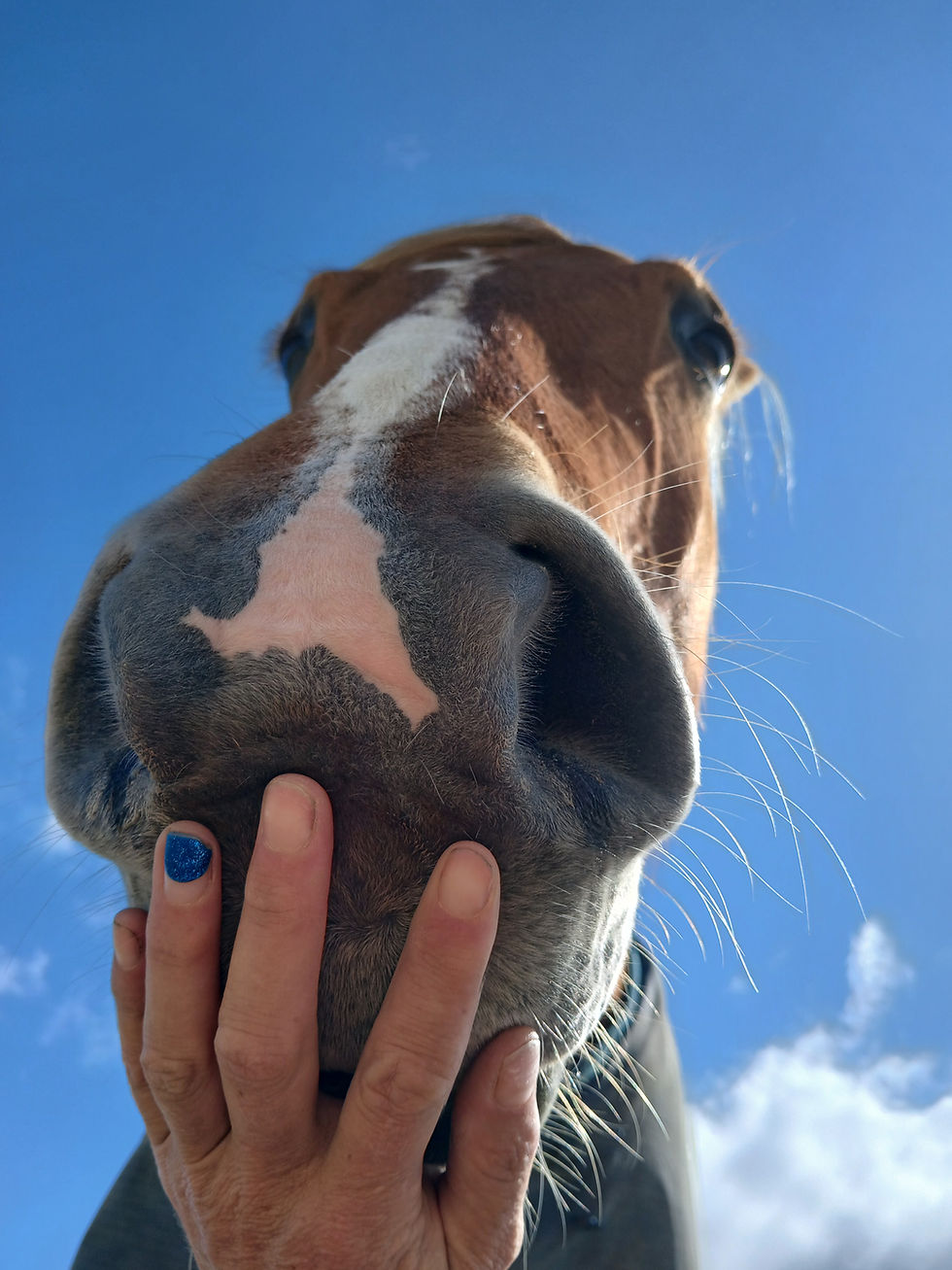
Horses are highly attentive animals.
As prey animals, their survival depends partly on noticing movement, posture, muscle tension and changes within their environment. They respond to our pace, position, gestures and behaviour—often before we have consciously recognised what we are communicating.
A horse may notice when someone approaches abruptly, holds tension through their body or gives inconsistent signals.
This can provide immediate, non-verbal feedback.
If we want a horse to feel safe enough to remain with us, we may need to slow down, soften our approach and become clearer in our body language.
That process can build self-awareness.
It allows us to ask:
What am I communicating through my body?
Am I present or distracted?
Am I calm, or am I trying to appear calm?
Are my intention and behaviour aligned?
Horses don’t judge the answers. They respond to what they experience.
What the Science Can—and Cannot—Tell Us
There is growing research into equine-assisted services and the possible psychological and physiological effects of human–horse interaction.
Small studies have examined heart rate, heart-rate variability and whether physiological patterns between horses and people can become coordinated during particular interactions. Some findings suggest this may occur, but the research remains emerging, study groups are often small and results should be interpreted carefully. It does not yet prove that a horse’s electromagnetic field regulates a human nervous system or that horses deliberately align our heart rhythms. Recent human–horse HRV research and a 2025 pilot study involving veterans illustrate both the potential and the limitations of this developing evidence.
Claims that horses can detect a human heartbeat from several feet away or automatically lower blood pressure, cortisol and inflammation should not be presented as established facts.
What we can say is that structured interaction with horses may provide a combination of movement, focused attention, relationship, sensory engagement, outdoor activity and meaningful achievement.
Any of these could contribute to feeling calmer, more confident or more connected.
The experience is real, even while science continues investigating exactly how and why it may help.
Presence Creates the Opportunity to Settle
When we spend calm, focused time with a horse, our attention often shifts away from racing thoughts and into what is happening directly around us.
We notice:
The rhythm of the horse’s breathing
The warmth of its body
The movement of its ears
The feel of the ground
Our own posture and muscle tension
The pace of our approach
The quality of our breathing
This sensory awareness can help orient us to the present.
The horse also gives us a reason to regulate our behaviour. Moving too quickly, communicating unclearly or becoming frustrated affects the interaction.
We learn that calmness isn’t simply a thought.
It is something expressed through our breathing, movement, attention and ability to pause.
The Heart Horse
Many people who have shared their lives with horses understand the idea of a “heart horse.”
It is the horse with whom the connection feels different.
There may be a depth of trust, familiarity and recognition that is difficult to put into words. It develops through time, consistency, shared experiences and learning one another’s ways.
Horses can learn familiar voices, routines and patterns of interaction. People also become highly attuned to the subtle signals of a horse they know well.
That mutual familiarity can create a profound sense of partnership.
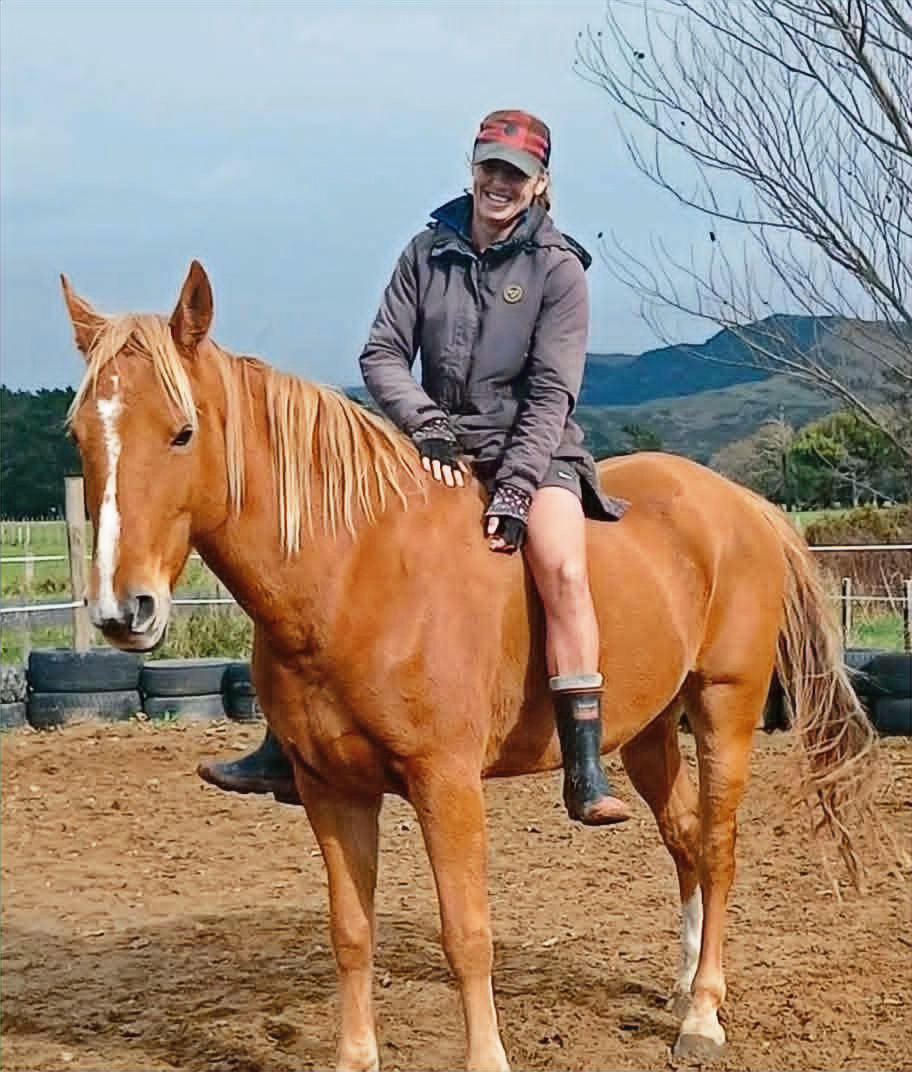
Fabiola was my heart horse.
She stood beside me through some of the hardest seasons of my life. When everything around me felt unstable, my connection with her remained steady.
She became an anchor—a living reminder to return to the moment in front of me.
That bond was sacred to me.
Why I Am Building a Round Pen
The round pen will be more than a physical structure.
It will provide a contained environment for safe, ground-based interaction, observation and connection.
My vision is for it to support experiences centred around:
Grounding and present-moment awareness
Emotional and bodily awareness
Calm, clear communication
Confidence building
Boundaries and personal space
Mind–body reconnection
Trust, patience and consistency
Meaningful connection with an animal
This won’t be about forcing a horse to perform or using an animal simply as a tool for human healing.
The horse’s wellbeing, choice and comfort must remain central.
Participants also need clear boundaries, appropriate supervision and an experience suited to their needs and ability.

Connection Must Be Safe for Both
Horses are sensitive, powerful animals with their own histories, preferences and limits.
For this work to be genuinely ethical, we must notice what the horse is communicating too.
A horse turning away, showing tension or seeking distance is providing information. That communication should be respected rather than interpreted as resistance that must be overcome.
This creates another important lesson:
Connection cannot be forced.
Trust requires time.
Boundaries belong to both beings.
The aim is not to make a horse responsible for regulating or healing a person. It is to create conditions where a respectful interaction may support awareness, learning and connection for the human without compromising the horse.

Part of a Wider Wellness Approach
My work has always been centred around resilience, strengths-based support, nervous-system awareness and holistic wellbeing.
Horses fit naturally within that approach because interacting with them involves the whole person.
We think.
We feel.
We move.
We breathe.
We communicate verbally and non-verbally.
We become more aware of the space we occupy and how we affect another living being.
Horse-supported wellness will form one part of a wider approach—not a replacement for counselling, medical care or specialised trauma treatment.
Where clinical treatment is required, it should be provided by appropriately qualified professionals. My role is to create a safe, grounded wellbeing experience within my professional scope and collaborate or refer when someone needs additional support.
Coming Home to Ourselves
The connection between horses and humans doesn’t need to be exaggerated to be profound.
We don’t need to claim that every horse automatically heals trauma or that an invisible heart field is responsible for every calming experience.
The truth is already powerful.
Horses invite us to pay attention.
They encourage us to slow down.
They make us aware of our breath, our body and the way we enter a space.
They respond to consistency, clarity and respect.
They can help us experience connection without needing to fill the silence.
Sometimes the most meaningful shift doesn’t come from talking.
Sometimes it begins by standing quietly beside a horse, feeling the earth beneath our feet and remembering how to be fully present within our own body.
Fabiola helped me find my way back to myself.
Now, through Fabiola Park and the wellness centre I am building, her legacy will help create that opportunity for others.

Comments